Innovative Agri-PV Technology for Efficient Dual Use
The solar park’s technical design was specifically tailored to the requirements of agricultural operations.
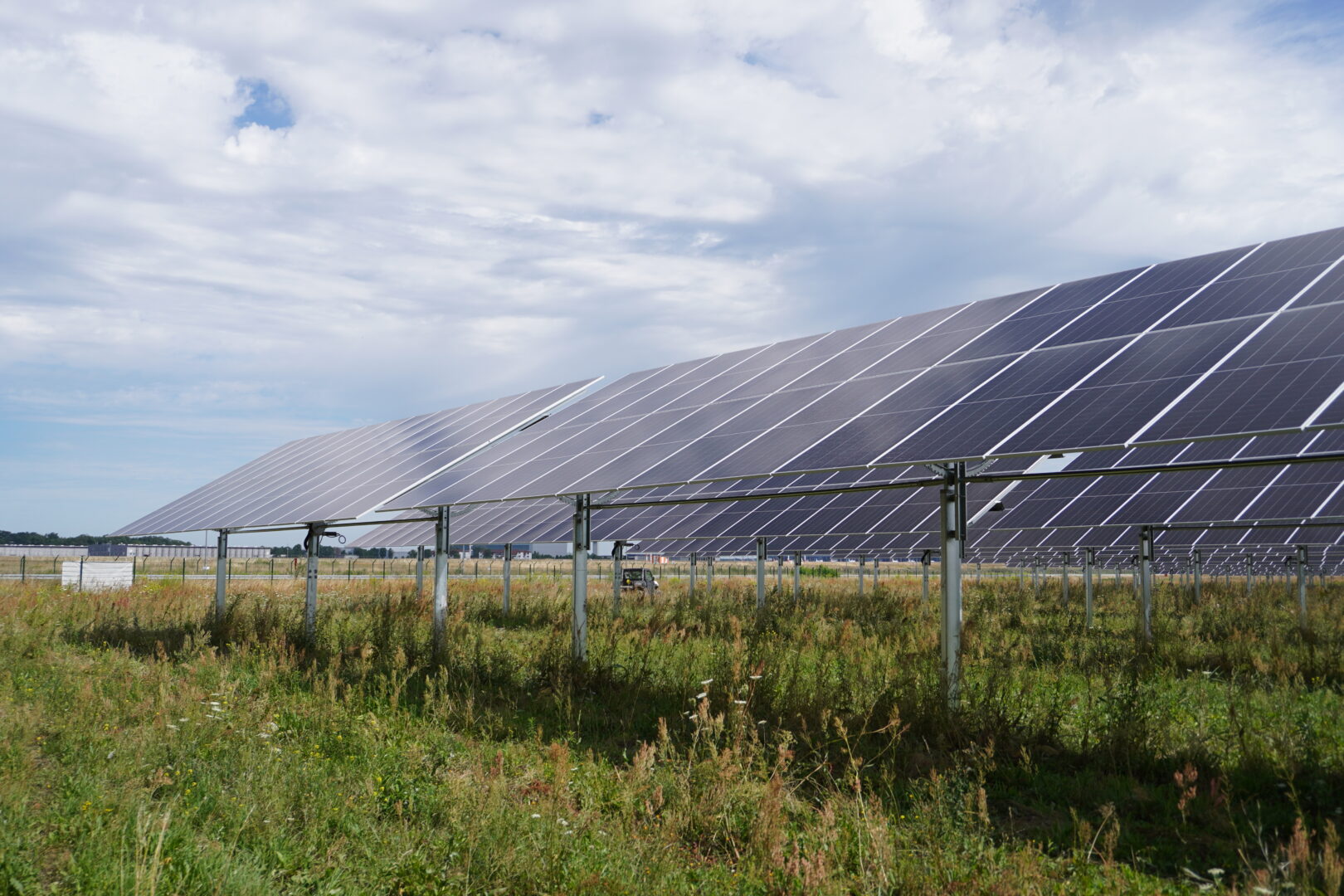
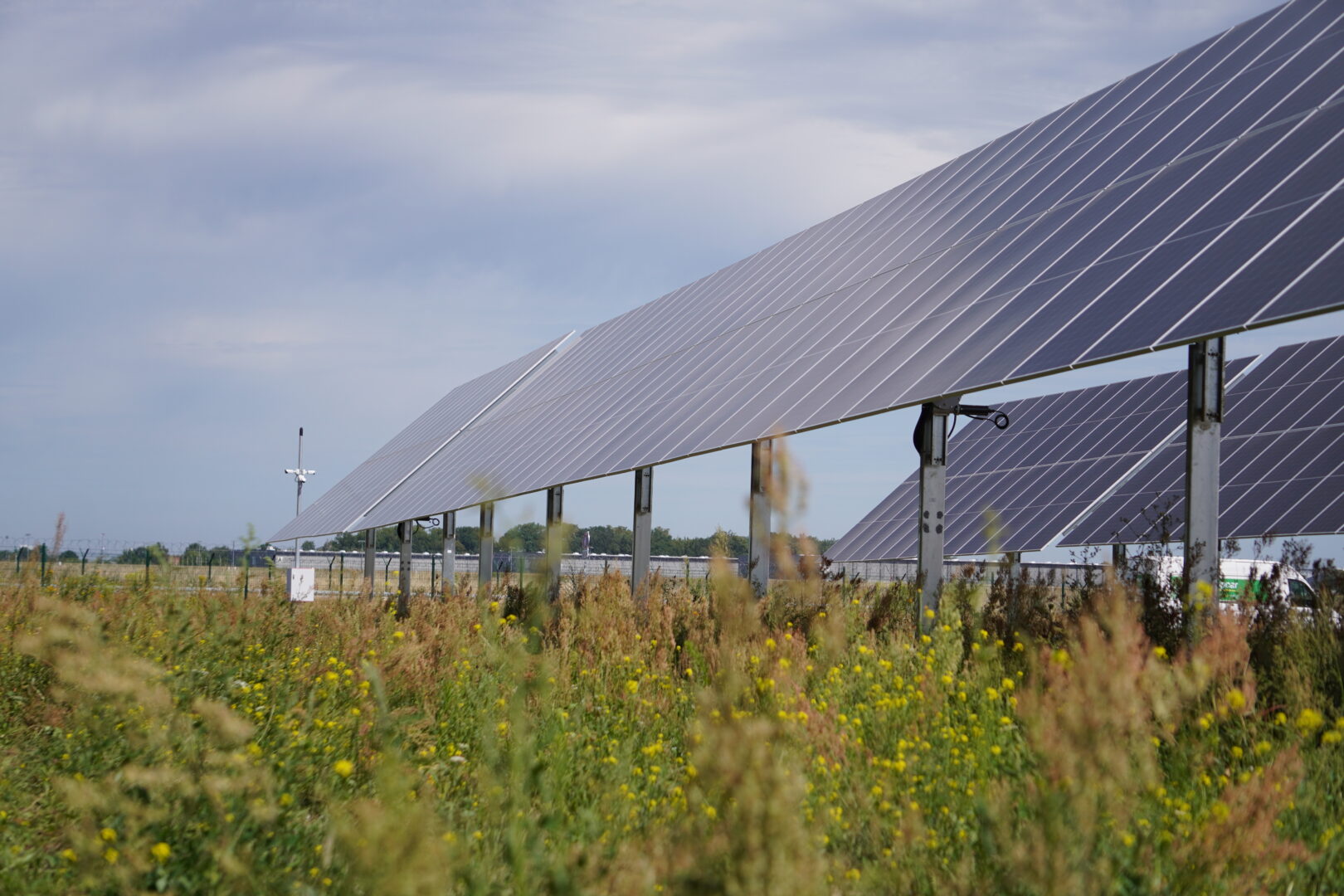
The bifacial solar modules are installed on single-axis tracking systems that follow the sun’s path, thereby enabling optimized energy generation.
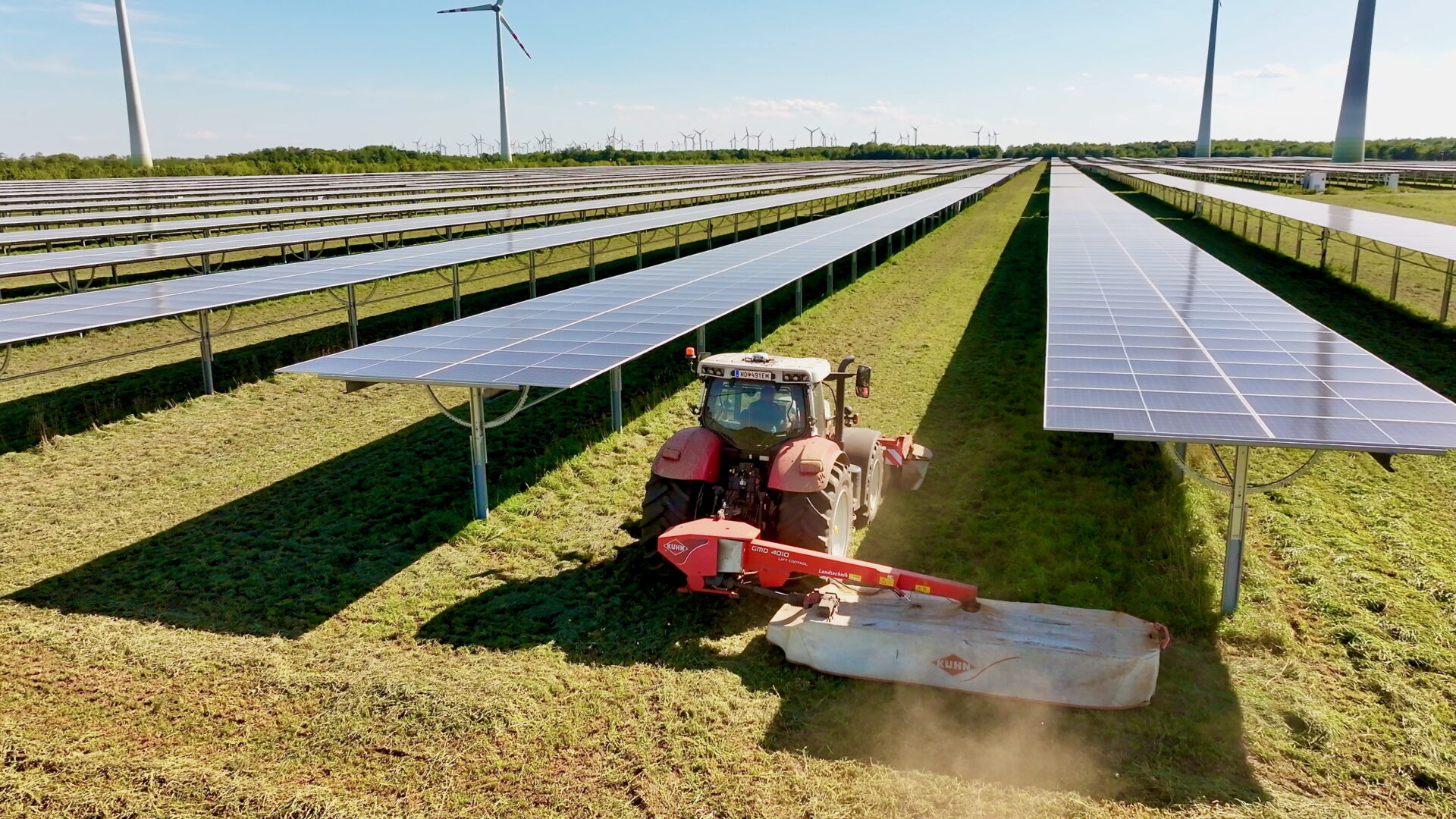
With row spacing of about 11 meters, agricultural machinery has a working width of up to 9 meters at its disposal. A unique feature is the flexible control of the trackers: if necessary, the farmer can lock the solar modules into a fixed position to efficiently cultivate the areas between the rows of modules.
The facility thus enables a long-term combination of agricultural production and renewable electricity generation without dedicating the land exclusively to energy production.
Agriculture and Biodiversity in Harmony
In addition to energy production, the project focuses on the sustainable use of agricultural land. At least 90 percent of the total area will be preserved for organic farming.
The land is managed by the Bioland-certified Landgut Geelhaar farm. The agricultural management plan calls for the cultivation of various field crops, cover crops, and forage crops.
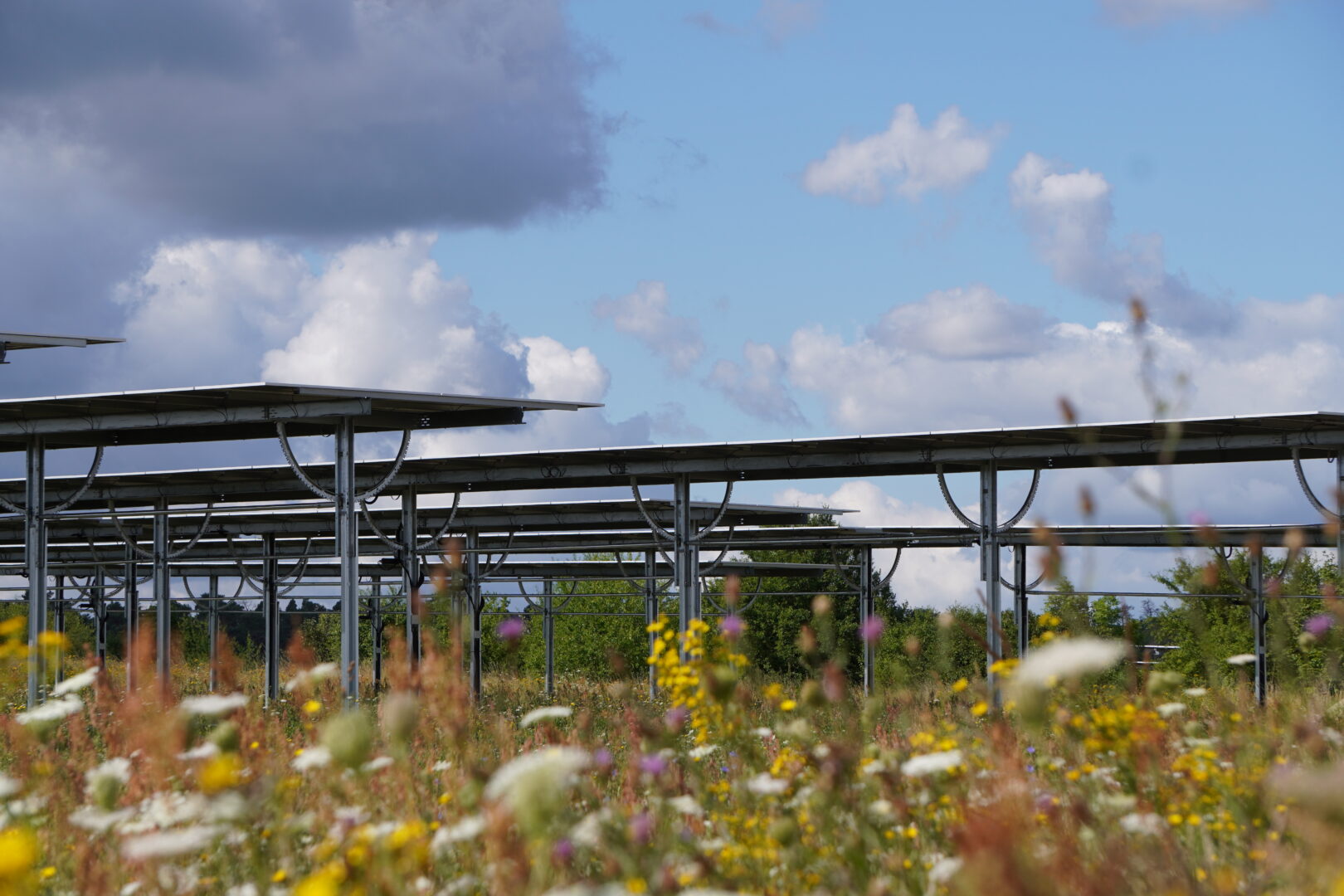
In addition, targeted measures to promote biodiversity are being implemented within the solar park. Ecologically valuable habitats are being created beneath the module racks and in other areas of the site. Furthermore, compensatory measures to support breeding birds are being implemented on approximately 17 hectares outside the facility.
The project also benefits from scientific support. The Leibniz Center for Agricultural Landscape Research (ZALF) is studying the interactions between agricultural land use and agri-photovoltaics. In addition, the Technical University of Dresden is researching the impacts on biodiversity, nature, and the landscape.
The findings are intended to help tailor future Agri-PV projects even better to the needs of agriculture and nature conservation.
Technical Challenges Successfully Overcome
Due to the unique site conditions, the construction of the solar park posed significant challenges for both planning and construction.
The project site is located immediately south of Berlin Brandenburg Airport (BER). The gently rolling topography, as well as existing utility lines—including high-voltage, gas, and water lines—had to be taken into account during the technical planning phase.
By taking these site-specific requirements into account, GOLDBECK SOLAR was able to complete the solar park within eleven months and successfully bring it online.
A flagship project for the energy and agricultural transitions
The Schönefeld Agri-PV Park demonstrates how large-scale solar energy generation can be combined with sustainable agricultural use.
With an installed capacity of 48 MWp, annual electricity generation of approximately 59 GWh, and land that continues to be used primarily for agricultural purposes, the project makes an important contribution to the energy transition.
At the same time, the combination of innovative tracking technology, biodiversity measures, and scientific monitoring provides valuable insights for the future development of large-scale agri-photovoltaic systems.
Schönefeld thus serves as a prime example of the efficient multiple use of agricultural land and the successful collaboration between project developers, investors, the agricultural sector, research institutions, and EPC companies.