Battery storage
We are convinced that a full transition to renewable energy can only succeed with smart connectivity between energy production and consumption. This ensures that electricity is available exactly when it’s needed. Battery energy storage systems are both economically viable and technically proven, making them perfectly suited for widespread use today.
GOLDBECK SOLAR has been the market leader in the turnkey construction of large industrial solar systems for over two decades. And our battery Energy Storage Systems are also sustainable, well thought-out, profitable and individually tailored to the needs of our customers – a future-oriented recipe for success!
We support our customers along the entire value chain of their projects – from the initial idea, project development, procurement and implementation through to the maintenance of the battery energy storage system. We are your gateway to renewable energies.

Energy Storage Systems are the pioneers of the energy transformation. Thanks to their flexibility, they stabilize the power grid and enable more renewable energy to be fed into the grid. They can be installed directly on the grid on a large scale and offer many other advantages:
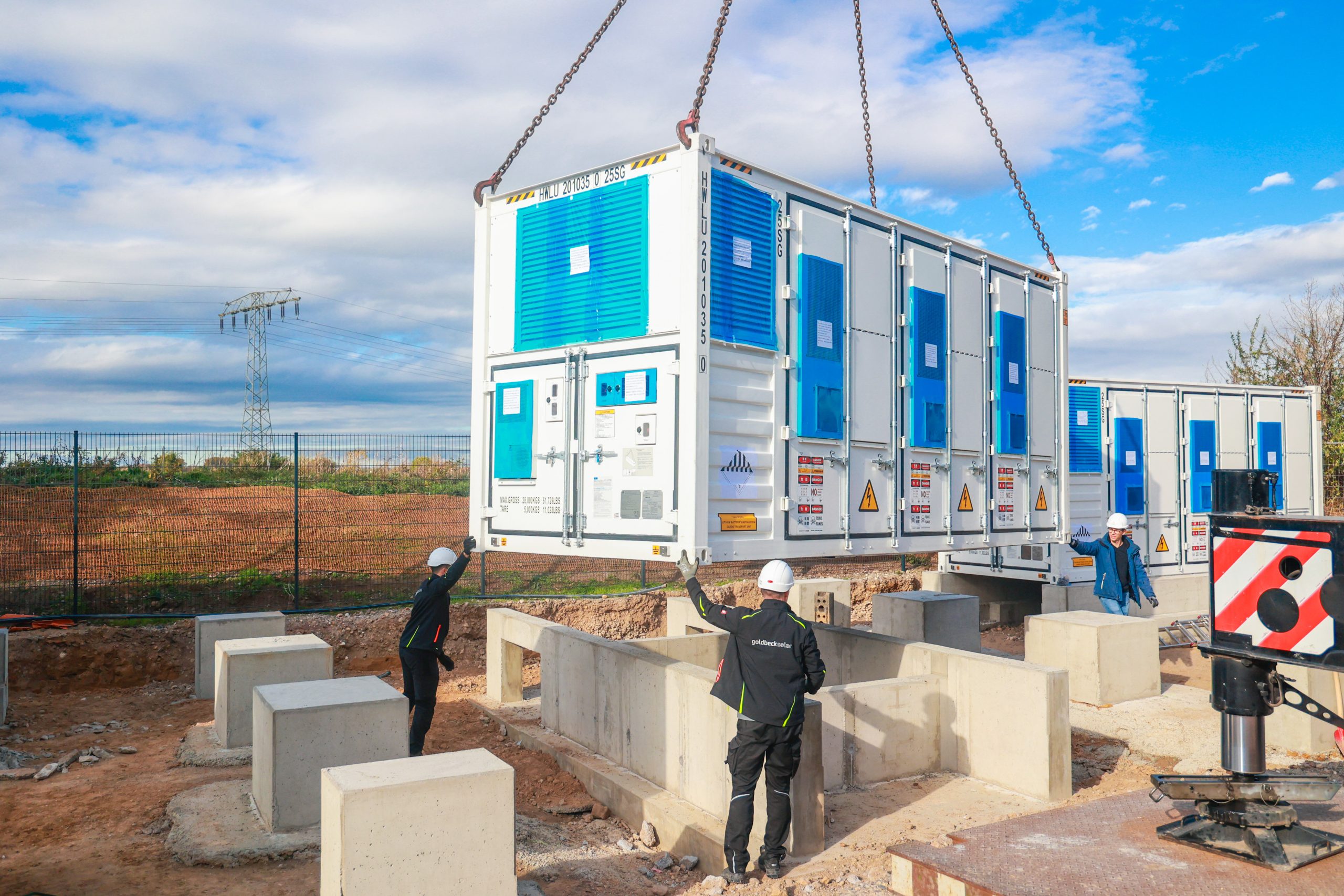
- Battery storage systems can balance the grid in real time and prevent power outages. In this way, more renewable energies can be integrated into the system. At the same time, they prevent unnecessary investments in fossil fuel power plants.
- Equalization of the RES or retail portfolio
- The economic efficiency of renewable energies is improved and local grids are relieved
- Green electricity is provided around the clock
- Electricity costs for industrial consumers fall significantly
We offer the following battery storage models:
01
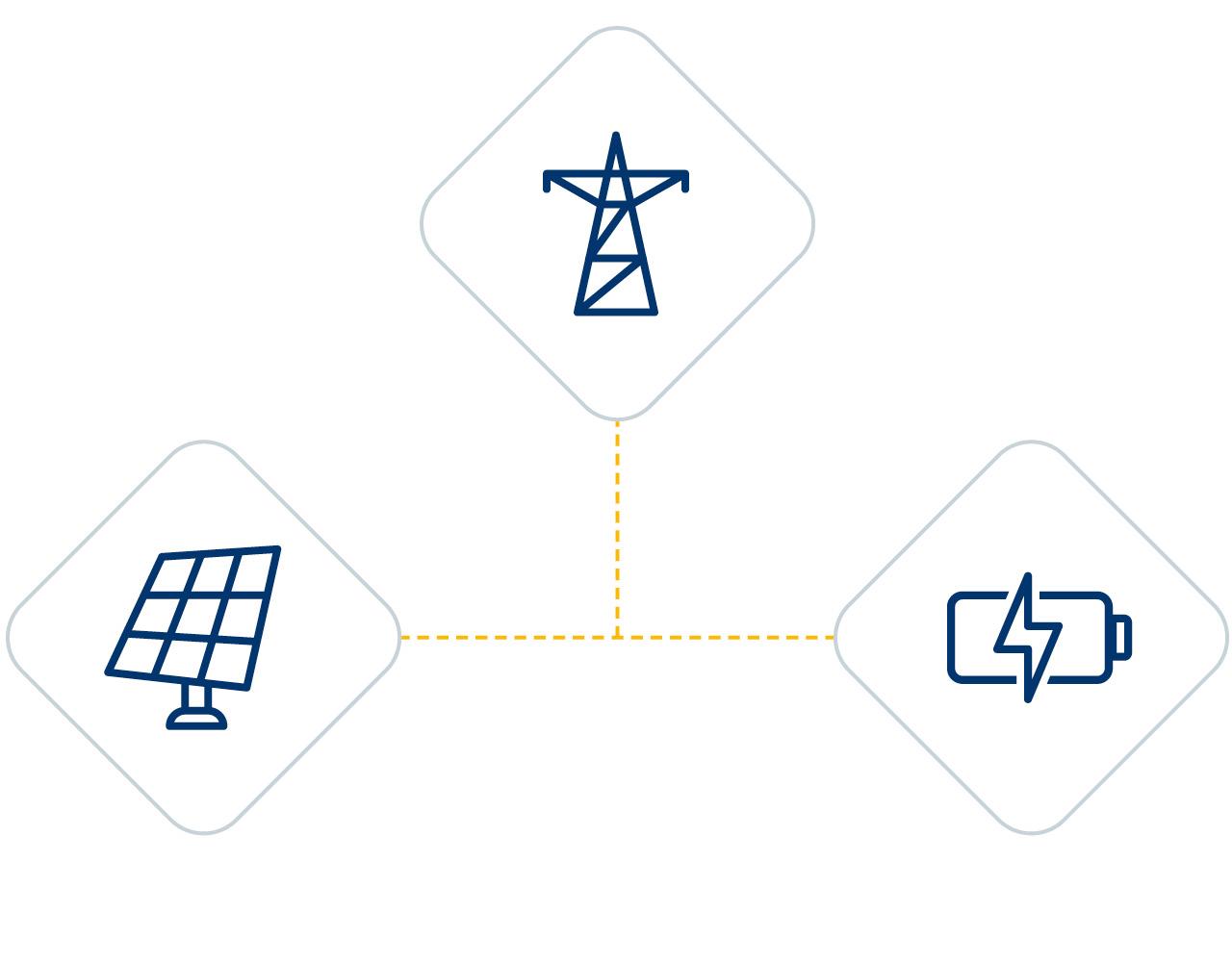
DC-coupled location
02
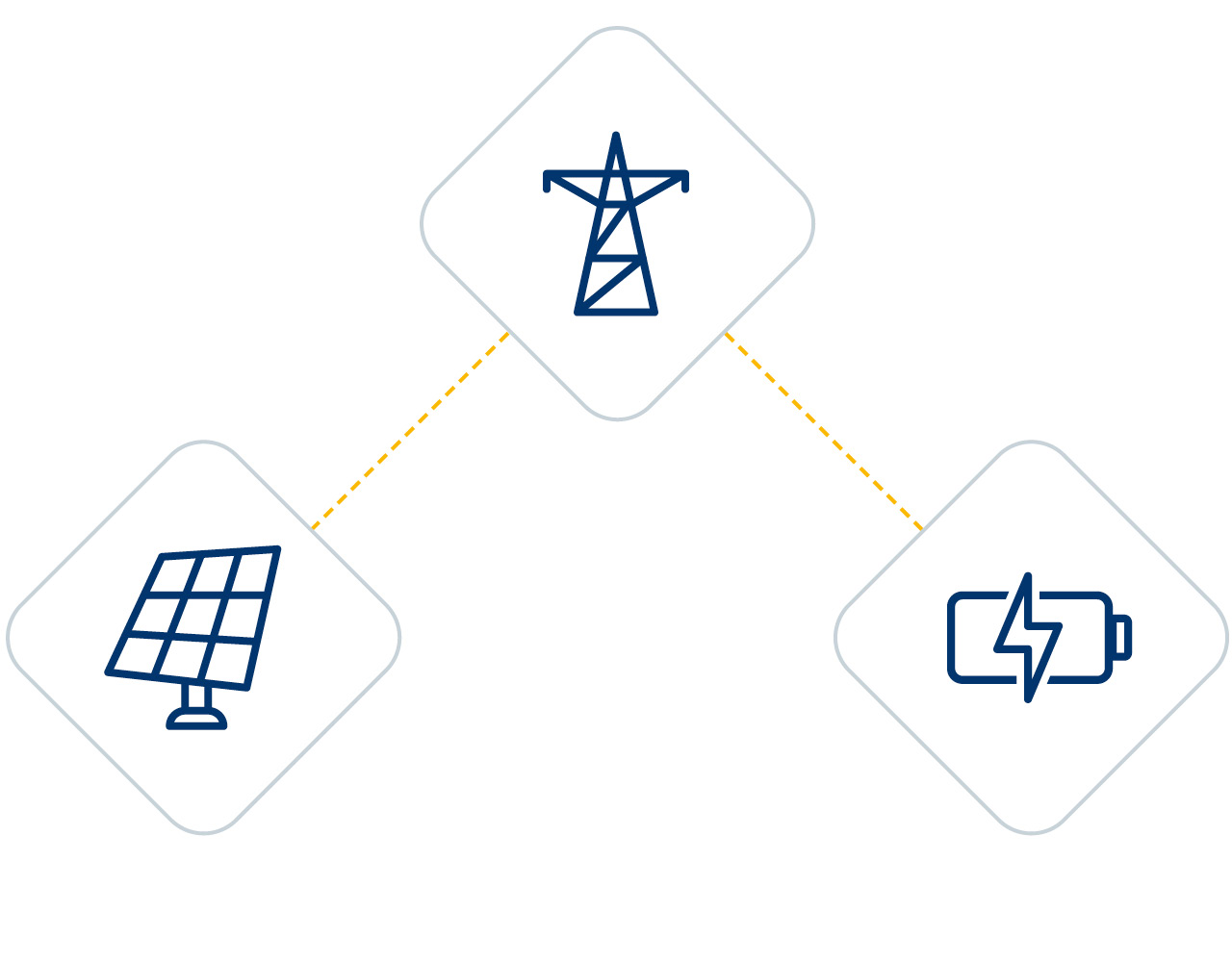
AC-coupled location
03
Stand-Alone Location
Battery storage in combination with photovoltaics
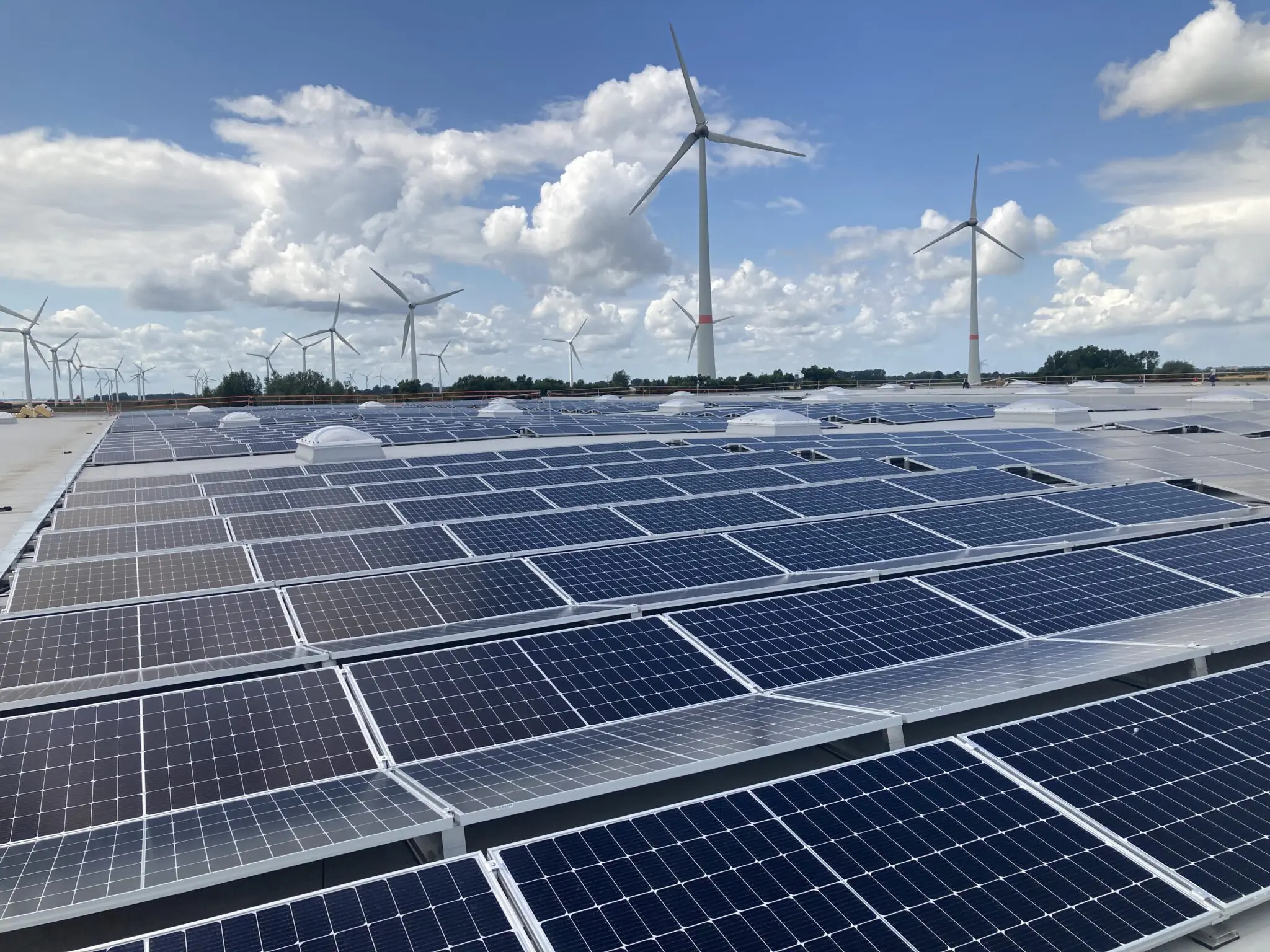
The combination of BESS with solar projects leverages the benefits of both concepts by storing excess energy generated during peak times for later use, ensuring a stable and reliable energy supply and improving grid stability. By integrating BESS with solar energy, we enable an efficient and sustainable energy ecosystem that provides financial and environmental benefits and helps promote clean energy solutions.
Stand-alone BESS
Stand-alone battery storage systems can relieve the load on grids and thus stabilize them while maintaining a high level of economic efficiency and flexibility.
BESS: from development to operation
GOLDBECK SOLAR takes over the planning, procurement and realization of the battery storage system. We are at your side from the project development of the battery storage system to the procurement of the necessary materials and services through to implementation.
BESS: from development to operation
01
Area testing & development
We analyze an area with regard to its suitability as a location for battery storage and evaluate the approval situation as well as the economic factors.
- Site identification, site inspection and assessment
- Grid connection request
- Initial design and preliminary technical planning
- Obtaining building rights
- Grid connection planning, route
02
Construction phase
We procure the necessary components, design and construct the BESS, and then connect it to the grid.
- Detailed implementation planning, based on which the components are purchased
- Construction
- Grid Connection and Commissioning
03
Maintenance
With our maintenance service, we ensure reliable operation of the battery storage system after completion and Grid Connection.
- Maintenance & servicing
- Technical management
Your advantages with GOLDBECK SOLAR
GOLDBECK SOLAR accompanies its customers every step of the way to renewable energy. Together we plan and implement your battery storage system. We support you in various fields from the idea to the turnkey solution. We ensure a structured and optimized process and implement your project together with our services. The satisfaction of our customers is always at the center of our daily activities and is based on our fundamental corporate values.
You can rely on that:

Highest quality
With our technical and organizational expertise in the field of renewable energies and a deep passion for what we do, we are constantly setting new standards.

In-depth understanding of the energy sector
Our team at GOLDBECK SOLAR has extensive market knowledge and many years of experience in the solar industry. With our international presence, we combine global expertise and local know-how. This enables us to implement customized solar solutions efficiently and successfully – perfectly tailored to the specific local market requirements.

Long-term partnership
At GOLDBECK SOLAR, we focus on sustainable and trusting partnerships that go beyond individual projects. Our aim is to build stable and long-term business relationships based on reliability, transparency and joint value creation.

Excellent solar expertise for decades
Our team of engineers has over 20 years of experience in the construction of solar power plants with optimum yields. This expertise also flows into the realization of BESS. This is how we convince through professionalism in products and services.
Let’s talk
Do you have questions about our range, our services or our approach? Are you planning an energy battery storage system or do you have a suitable area? We would be happy to talk to you in a non-binding initial consultation.
FAQ
What does BESS stand for?
BESS stands for Battery Energy Storage System. It refers to a complete system that stores and supplies electricity using batteries, inverters, and control software.
In practice, the term BESS is commonly used by developers, EPC companies, and investors, as it describes a full project solution. The term ESS (Energy Storage System), on the other hand, is more often used on the supplier or manufacturer side to describe the underlying technology.
Simply put: ESS = technology, BESS = full system solution.
What are the benefits of energy storage systems?
Energy storage systems (such as BESS) help balance the natural variability of renewable energy, which produces electricity only when the sun shines or the wind blows.
They provide several key benefits:
- Storing excess energy for use at a later time
- Stabilizing the grid, especially with a high share of renewables
- Making solar and wind dispatchable, meaning energy can be delivered when it is needed
In simple terms:
- More renewables without storage can lead to instability
- More renewables with storage enable a reliable energy supply
What is co-location?
Co-location means installing a Battery Energy Storage System (BESS) next to a solar power plant.
Both systems share key resources, including:
- Grid connection
- Land and infrastructure
This setup increases efficiency and creates more value from the same project footprint.
Can BESS work without renewable energy?
Yes. A Battery Energy Storage System (BESS) can operate in different configurations:
- Standalone, for example providing grid services or enabling energy trading
- Combined with renewables, such as solar (PV) or wind
While standalone applications are common, the highest value is typically achieved when BESS is combined with renewable energy sources.
What does a 100 MW/200 MWh BESS system entail?
A 100 MW / 200 MWh Battery Energy Storage System (BESS) typically represents a 2-hour storage system, meaning it can deliver or consume 100 MW of power for 2 hours.
A system of this size usually includes:
- Around 40 battery containers (20 ft each)
- Around 20 inverter and transformer stations
- Approximately 0.4 hectares of footprint
In simple terms, it can be compared to a photovoltaic (PV) plant:
- Battery containers replace solar modules
- The rest, such as grid connection, control systems, and infrastructure, is largely the same
What sustainability considerations come into play when operating a BESS?
Modern Battery Energy Storage Systems (BESS) have significantly improved in terms of sustainability compared to systems from 10 years ago.
Key considerations include:
- The widespread use of LFP (lithium iron phosphate) batteries, which do not require cobalt, offer improved safety, and provide a longer operational life
- High recycling potential and opportunities for second-life applications
- A lower lifecycle impact per stored kWh, making them more resource-efficient over time
Overall, BESS is evolving into a scalable and increasingly recyclable energy solution, rather than a waste concern.
Overall, BESS is evolving into a scalable and increasingly recyclable energy solution, rather than a waste concern.
How does a BESS generate revenue?
A Battery Energy Storage System (BESS) generates revenue by combining multiple value streams rather than relying on a single source.
Typical revenue streams include:
- Grid stabilization, such as frequency control services
- Energy trading, by storing electricity when prices are low and selling it when prices are high
- Capacity and flexibility services, supporting grid operators during peak demand or congestion
In simple terms, BESS follows a portfolio approach: it stacks different services to maximize overall revenue.
What business models are available for BESS?
Battery Energy Storage Systems (BESS) typically rely on a mix of revenue streams, depending on the specific market and regulatory environment.
A common revenue breakdown includes:
- Frequency services: ~30–50%
- Energy trading: ~20–40%
- Capacity markets: ~10–20%
- Grid services: ~5–15%
The exact composition varies by market, but in most cases, BESS follows a multi-revenue (stacking) model rather than relying on a single income source.
Why is now the right time to invest in BESS?
Several key developments make this the right time to invest in Battery Energy Storage Systems (BESS):
The main drivers are:
- Rapid growth of renewable energy, increasing the need for storage to balance supply and demand
- Rising grid instability, as more variable generation enters the system
- Strong demand for flexibility, to ensure reliable and efficient energy supply
As a result, BESS plays a central role in the energy transition, enabling a more stable and flexible power system.
What risks do investors face with BESS projects?
The primary risk in Battery Energy Storage System (BESS) projects is not the technology itself, but market and revenue uncertainty.
Key risk factors include:
- Revenue volatility, driven by fluctuating market prices and service demand
- Changing regulatory frameworks, which can impact business models and returns
- Performance and degradation assumptions, affecting long-term system output and profitability
- Market exposure (merchant risk), especially in projects without fixed revenue contracts
Overall, BESS is considered bankable, but a strong understanding of market dynamics is essential for successful investment.
What funding programmes or regulatory incentives are available for BESS?
Funding programmes and regulatory incentives for Battery Energy Storage Systems (BESS) exist in most markets, but they are continuously evolving rather than fixed.
Common trends include:
- Support for grid stability, such as incentives for providing frequency control or balancing services
- Incentives for renewable integration, encouraging storage alongside solar and wind projects
- A shift from direct subsidies to market-based revenues, where systems earn income through participation in energy and flexibility markets
Overall, investors should expect a dynamic regulatory environment, requiring ongoing market monitoring rather than reliance on stable, long-term subsidy schemes.
Overall, investors should expect a dynamic regulatory environment, requiring ongoing market monitoring rather than reliance on stable, long-term subsidy schemes.
What services does an EPC contract for BESS cover?
An EPC contract for a Battery Energy Storage System (BESS) goes beyond the typical scope of photovoltaic (PV) projects, as it involves a higher level of system integration and performance responsibility.
In addition to standard Engineering, Procurement, and Construction (EPC) services, a BESS EPC contract typically includes:
– Full system integration, combining battery systems, power conversion systems (PCS), and energy management systems (EMS)
– Performance guarantees, covering capacity, availability, and efficiency
– Grid compliance and control systems, ensuring proper interaction with the grid
– Safety and fire protection systems, addressing the specific risks of battery storage
Unlike PV projects, a full-wrap BESS EPC contract carries a greater share of responsibility for system integration and overall product performance.
- Full system integration, combining battery systems, power conversion systems (PCS), and energy management systems (EMS)
- Performance guarantees, covering capacity, availability, and efficiency
- Grid compliance and control systems, ensuring proper interaction with the grid
- Safety and fire protection systems, addressing the specific risks of battery storage
Unlike PV projects, a full-wrap BESS EPC contract carries a greater share of responsibility for system integration and overall product performance.
How long does the planning and implementation of a BESS project take?
The timeline for a Battery Energy Storage System (BESS) project typically ranges from around 1 to 2.5 years, depending on site conditions and regulatory requirements.
A common project schedule includes:
- Development and permitting: approximately 6–18 months
- Construction and commissioning: approximately 6–12 months
Overall, the duration can vary based on factors such as permitting processes, grid connection requirements, and project complexity.