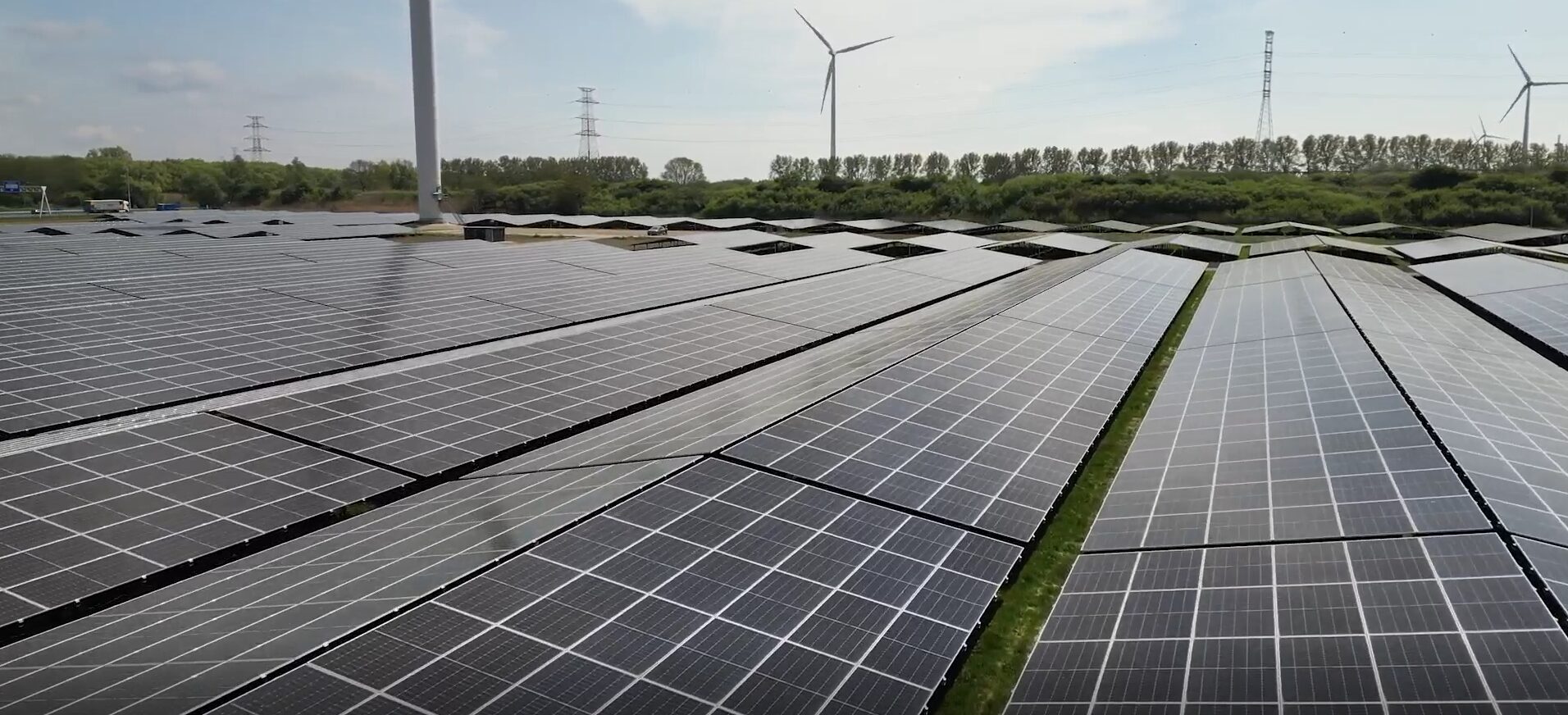
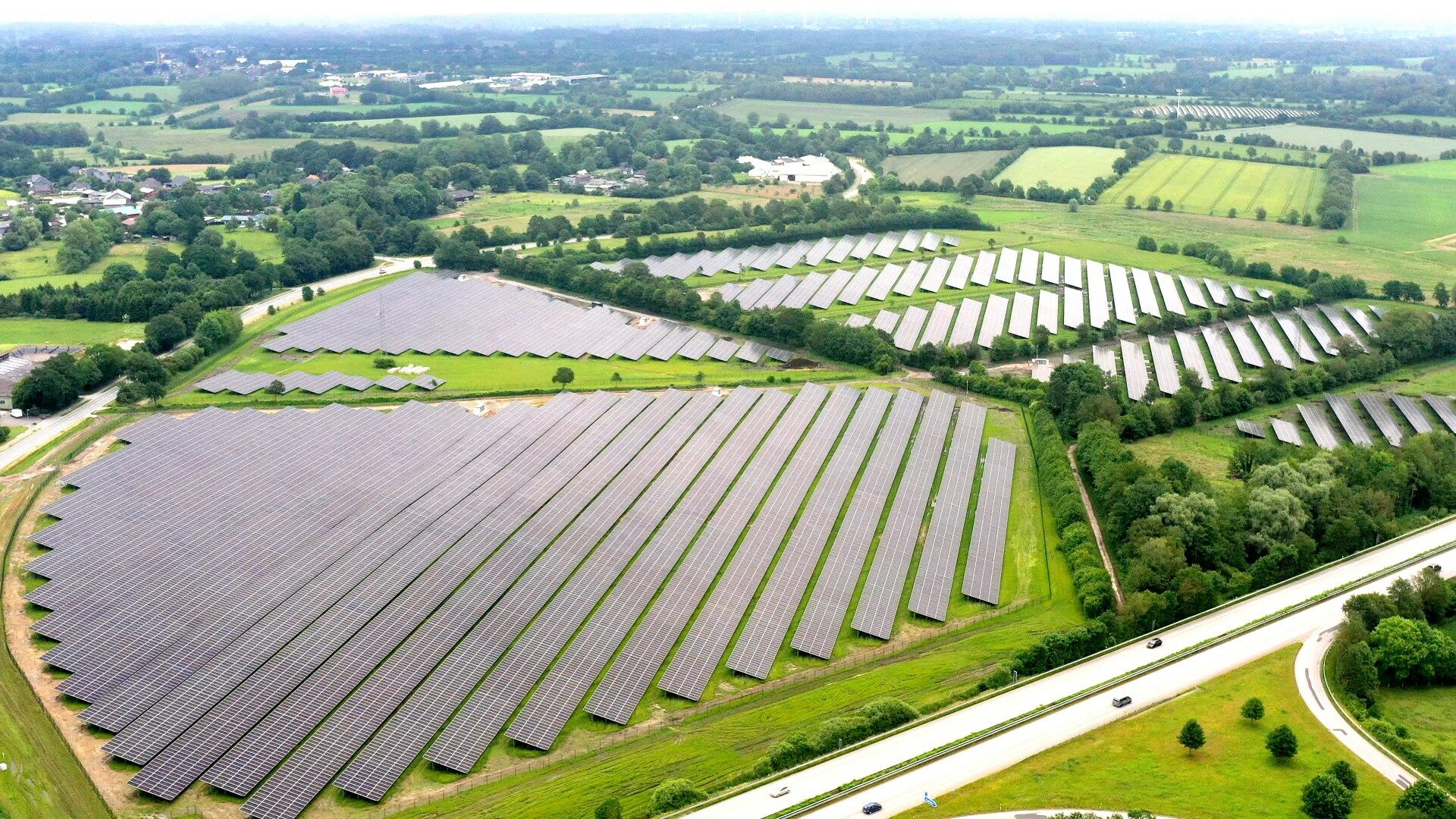
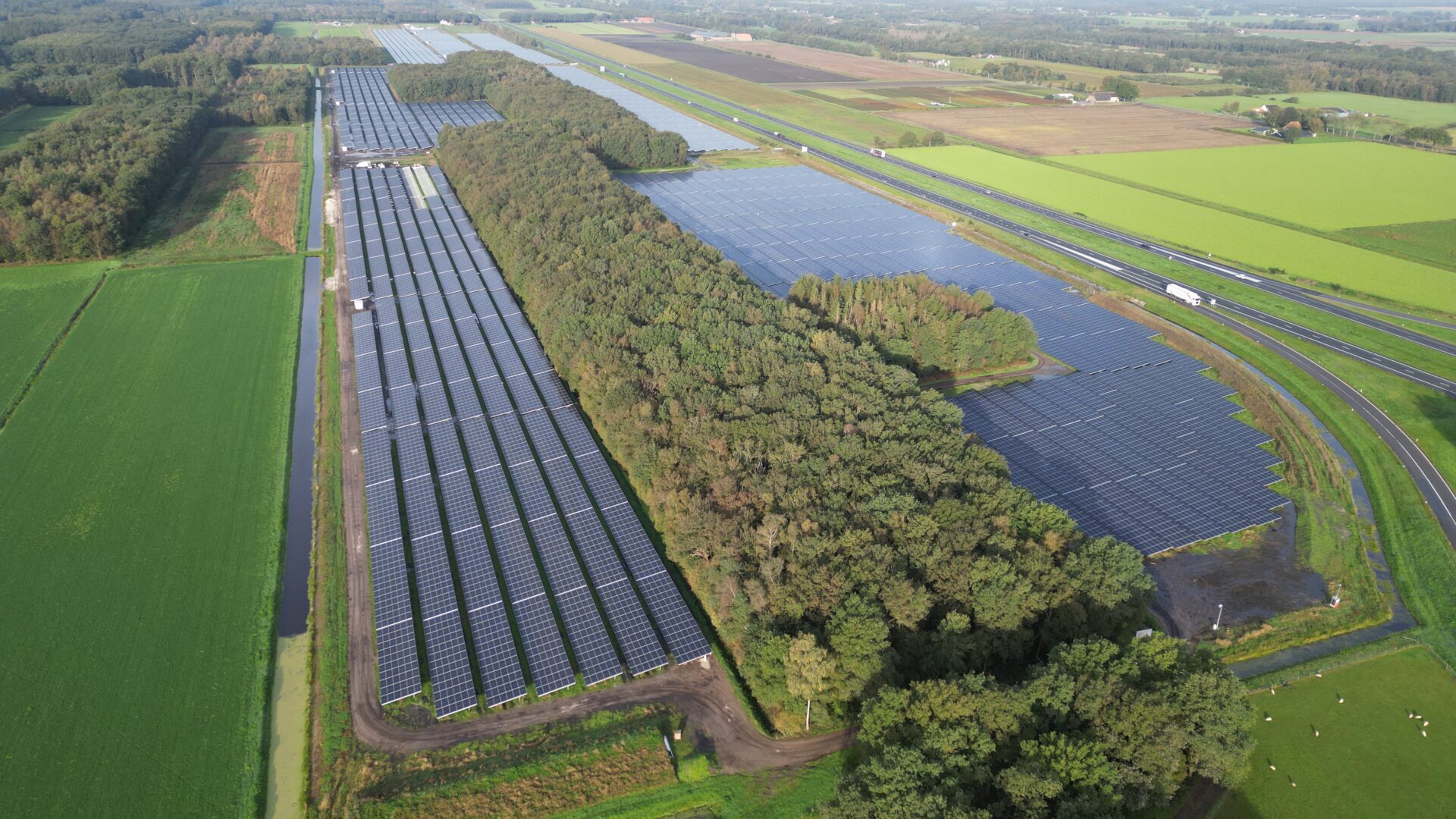
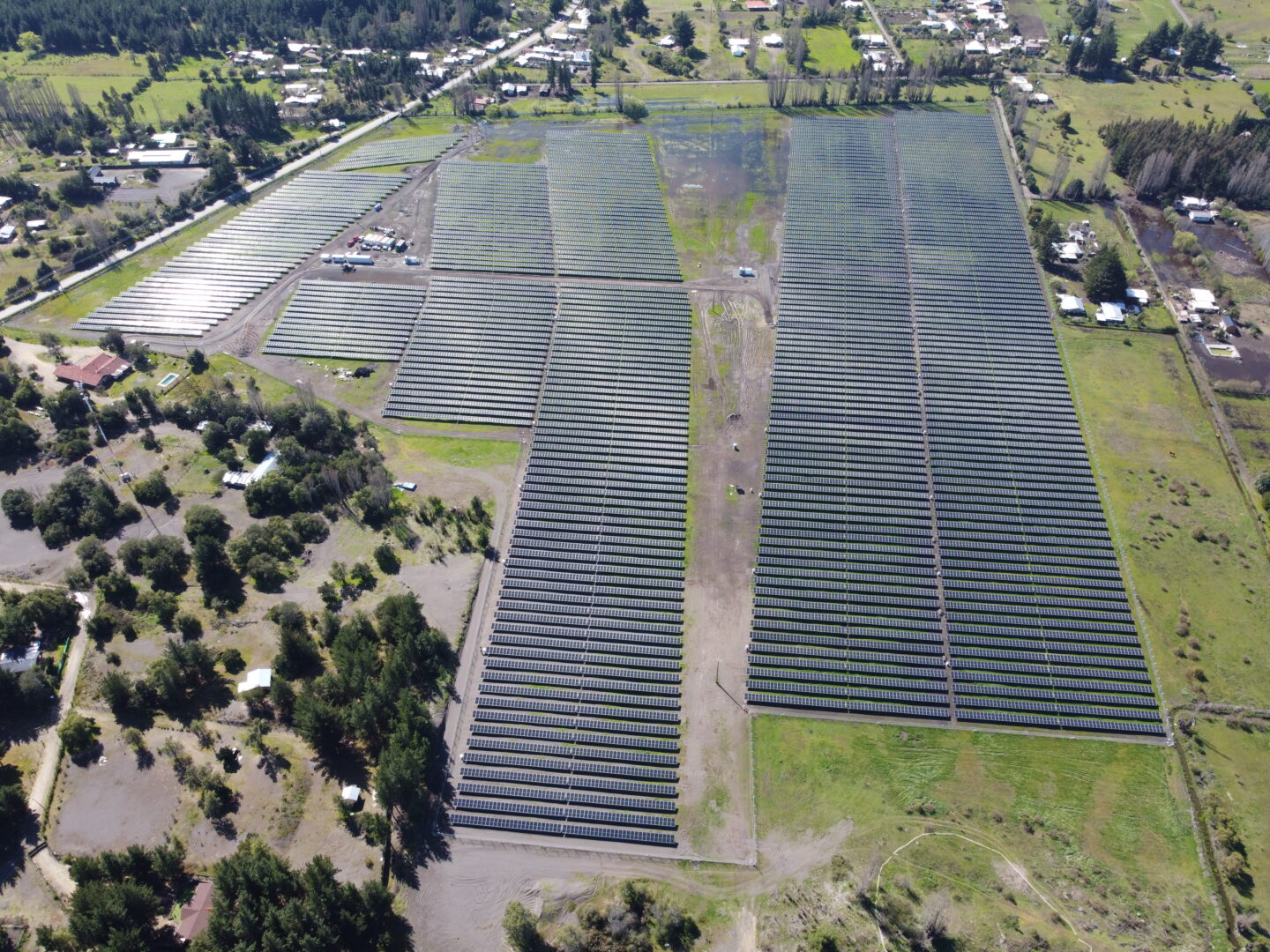
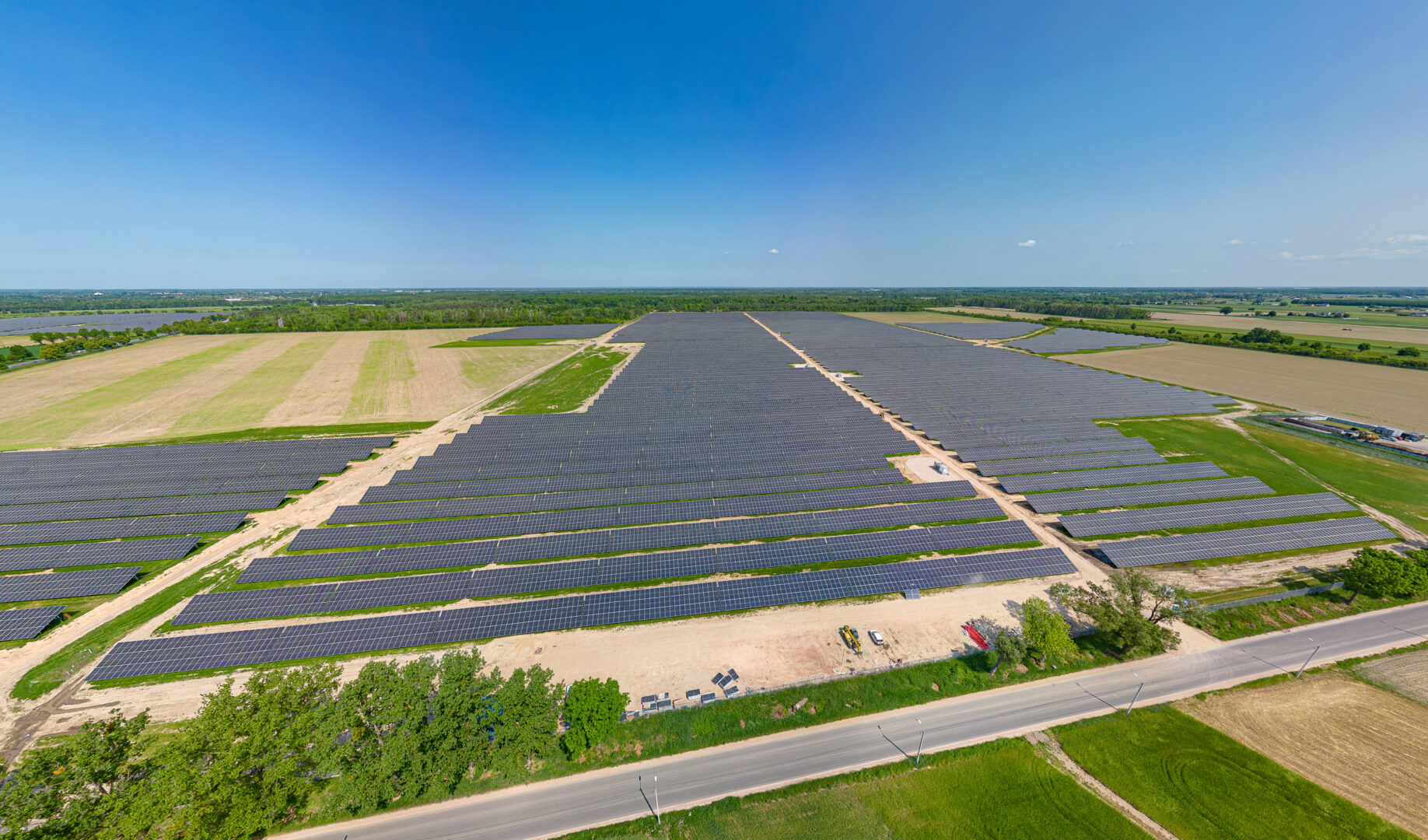
The Ossendrecht solar park is located directly on the border between the Netherlands and Belgium, underlining the cross-border importance of renewable energies. With around 88,000 modules and a decentralized inverter system, the plant generates around 44,500 MWh annually – enough to supply around 15,000 households with clean electricity.
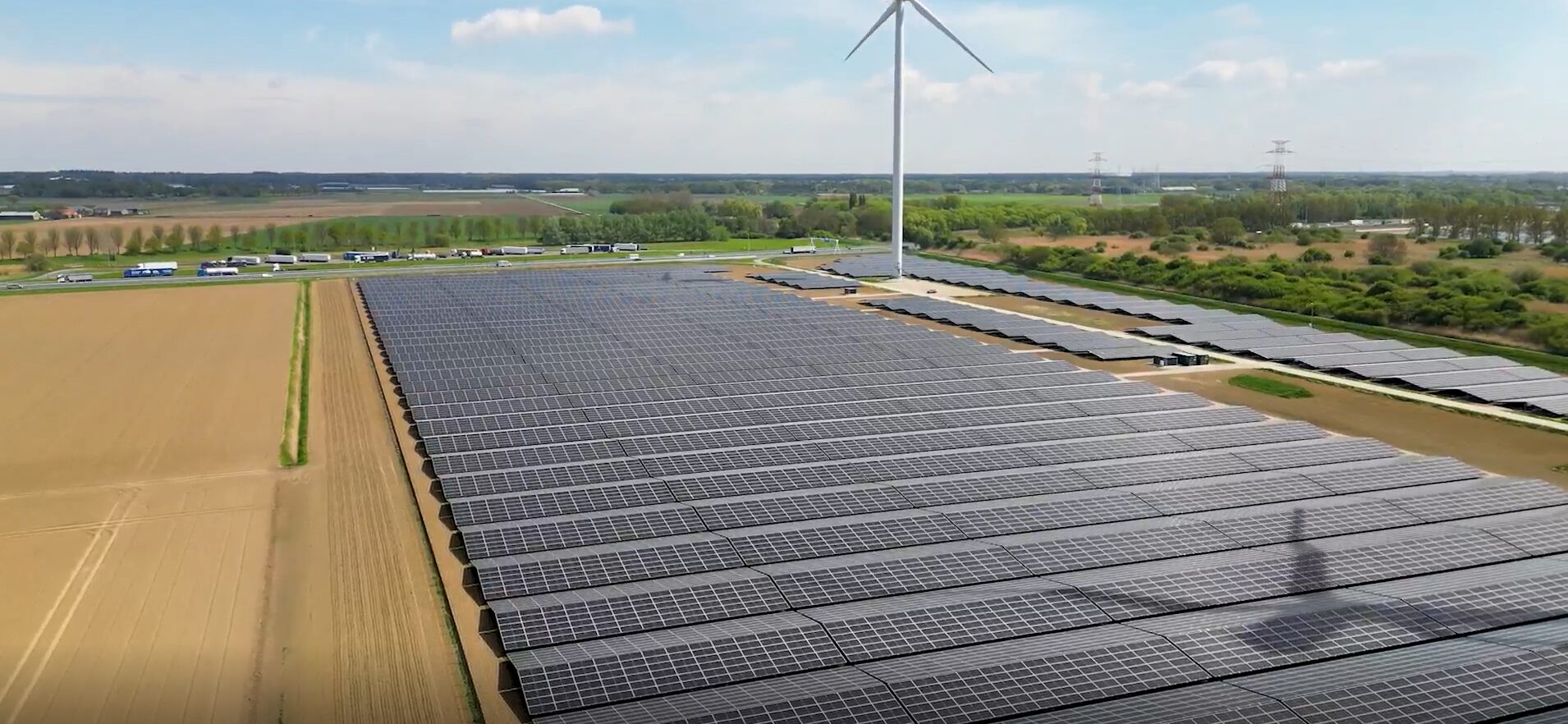
Ossendrecht solar park
Initial situation & objectives
The solar park is being built right on the border between the Netherlands and Belgium – a symbol of the international importance of renewable energy infrastructure. The aim was to implement a PV power plant that complements existing energy systems and enables the use of existing Grid Connections. The location within a wind farm area offered advantages, but at the same time placed special demands on planning, logistics and land use.
Location & planning concept
The direct embedding of the park in a wind area means reduced land consumption and the shared use of existing infrastructure. At the same time, various supply routes run under and along the construction site, which had to be precisely taken into account in the planning.
A complete 3D terrain modeling of the site was carried out to make all obstacles fully visible.
Technical implementation & construction
The solar park is being built with around 88,000 modules and a decentralized inverter system. This structure enables short cable routes, high system availability and clear segmentation for operation and maintenance.
A concept for the ecological enhancement of the site was developed in parallel with the construction work: native vegetation on the northern and western edges improves the habitats for insects, birds and small mammals.
Result & added value
The Kabeljauwbeek solar park makes an important contribution to the regional energy supply and shows how photovoltaics and wind energy can be sensibly combined. The use of existing grid capacities increases space efficiency and avoids additional infrastructure costs – a model that is also suitable for other hybrid locations.
Facts at a glance
- 44,500 MWh/a renewable energy
- Supply of ~ 15,000 households
- Reduced space requirement through combination with wind energy
- Planning reliability thanks to complete 3D terrain visualization
- Sustainable system concept with high efficiency potential
- Ecological enhancement through native vegetation